In this article, we will focus on:
- What an electrical contractor is?
- Trainings, Abilities, and Skills of Qualified Electrical Contractors
- Electrical Contractors & Communication Skills
- Electrical Contractors & Time Management
- Electrical Contractors & Soft Skills
- Electrical Contractors & Technical Skills
- Electrical Contractors and the Canadian Electrical Code
- Electrical Contractor’s Licenses, Certification, GST, and Business Structure
- The Electrical Contractor & Insurances and Bonds, WCB, & BBB and other Accreditations
- The Electrical Contractor & Master Electricians
- Residential Electrical Contractors
- Commercial Electrical Contractors
- Electrical Contractors and Electrical Tools
- Electrical Contractors and the Canadian Electrical Code & CSA
- Frequently Asked Questions about Electrical Contractors
Electrical Contractor (What is an Electrical Contractor?)
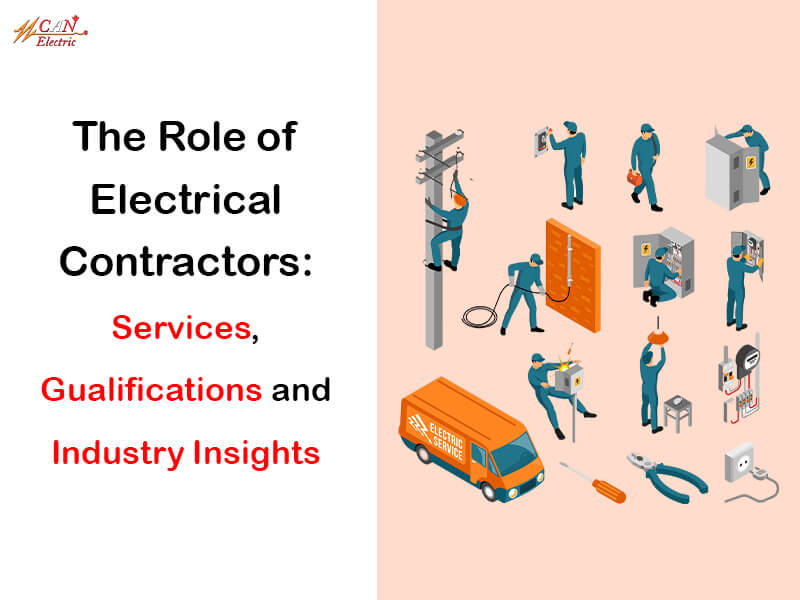
An electrical contractor is a trades company, specialized in electrical installations, wiring, maintenance, and repairs for electrical devices and machines, equipment, and systems pertaining to power distribution, transmission, and generation.
An electrical contractor also prepares, assembles, and tests electrical devices, wirings, fixtures, control systems, fire alarms, circuit breakers, panels, switchgears, transformers, ceiling fans, fuses, switches, outlets, generators, motors, and any other electrical device. Electrical contractors’ roles and responsibilities also includes reading blueprints, manufacturing instructions, technical diagrams, and including the followings, but are not limited to:
- Commissioning, testing, and inspecting electrical systems
- Reading, interpreting, and implementing electrical drawings
- Pulling, installing, terminating, splicing, and connecting wires
- Installing, repairing, and upgrading lights and lighting systems
- Installing and repairing electrical generators and power sources
- Installing and repairing renewable and sustainable energy systems
- Reading and implementing national electrical code and regulations
- Repairing, maintaining, inspecting, and upgrading electrical systems
- Installing, repairing, and upgrading wiring for power, HVAC systems
- Installing, repairing, and upgrading wiring for communication systems
- Inspecting, diagnosing, repairing, and replacing electrical equipment
- Understanding and implementing local and national safety regulations
- Inspecting and troubleshooting electrical wirings, devices, and systems
- Installing and maintaining power and control panels for power systems
- Installing and repairing data, fibre optic, security, and fire alarm systems
- Reading and implementing manufacturing specifications and instructions
- Conducting preventive electrical inspections, diagnoses, and maintenance
- Upgrading electrical systems to 100 amps, 200 amps, 300amps, and more
- Cutting, threading, bending, and installing conduits and electrical raceways
- Installing, repairing, and upgrading electrical tools, equipment, and devices
- Installing and repairing switchgear, breaker, contactor, panel, fuse and more.
Trainings, Abilities, and Skills of Qualified Electrical Contractors (Requirements to be a Successful Electrical Contractor)
First steps to be a successful electrical contractor is the management and leadership ability of the key role players for the electrical contractor company. Ability to work under pressure and in challenging environments physically, mental and emotionally with high resilience, consistency, and clear vision will enable you to be ahead of your competitors.
Another factor that will succeed an electrical contractor creating strong, harmonized, well connected and educated and specialized teams for fields that you offer electrical services with strong and aggressive leadership, management, marketing teams can be a major factor that contributes to the success of an electrical contractor.
Here are some of qualification for successful electrical contractors:
- Management and leadership skills
- Accuracy, safety, and Detail Orientation
- Project management and problem solving
- Strong communication and interpersonal skills
- Resilience, and strong physical and mental abilities
- Scheduling, time managements and timely decisions
- Quick and life learning and effective problem solving
- Strong, clear, long term business visions, plans, priorities
- Communication, collaboration, and customer service skills
- Team management and building teams that are energized and excited
- Life learner to keep up with technological and business advancements
- Market knowledge and adoptability and strong marketplace research teams
Electrical Contractors and Communication Skills
Excellent customer service and communications skill for all teams, especially teams dealing with marketing, administration, and customer services will enable an electrical contractor to increase sales, facilitate project implementations and have faster and easier internal and external operation.
Electricians with good communication skills will also better ready, understand and implement plans and manufacturing instructions and understand and answer to the customers demand and requests better.
Active listening is another important communication skill for electrical contractors to train their team members in order to achieve better sales and operational results.
Electrical Contractors & Time Management
Electrical contractors with trained and educated on time management teams will have more efficient operational and better customer service. Good time-management skills will enable electrical contractors to expediate electrical service duration which is crucial factor on commercial electrical wiring and emergency electrical services.
Electrical Contractors & Soft Skills
Electrical contractors who enroll and train their electricians, apprentices, management, and demonstrative stuff regularly on soft skill trainings will better compete and succeed. For examples parodical trainings on soft skills like time management, teamwork, customer services, and communications, are very important.
Electrical Contractors & Technical Skills
Electrical contractors who enroll and train their electricians, apprentices, and electrical technicians on technical and electrical code updates and regional and national electrical and safety regulations and electrical upgrades will better compete and succeed.
For examples it’s very important that all electricians and master electricians are enroll on Canadian electrical code updates when new version of electrical code book is published which it happens every three to four years.
Electrical Contractor’s Licenses, Certification, GST, and Business Structure
Electrical Contractor licensing and certification may change from province to province or territories, but we are going to tell you about most common requirements for electrical contractors licensing and certifications.
It is mandatory requirement in most provinces and territories to operate as electrical contractor you must hold a master electrician license or hire a master electrician to work for you which will enable you as electrical contractor to pull permits and deal with electrical inspection authorities to have your work inspected.
Electrical contractors can choose from several business structures depending on their needs and goals. The electrical contractor’s business structure, can be sole proprietorship, partnership, or corporation, here’s a brief overview of each option:
- Sole Proprietorship: This is the simple business structure where the owner is the business. The owner has full control over decision-making and is personally liable for all debts and obligations. This type of structure is easy to set up, has low regulatory requirements, and all profits go directly to the owner and the owner has 100% personal liability for business debts and risks and it can be harder than other structures to expand and raise capital.
- Partnership: A partnership involves two or more people who share ownership of the business, and two different types of partnerships are general partnerships or limited partnerships, that define the level of liability and involvement of each partner. This structure responsibility and resources are shared, easy to establish, and partners can bring complementary skills, and the partners are personally liable for business debts and obligations and possible disagreements and disputes between partners can affect the business, and it’s also can be harder to make decisions in comparison with single owner businesses.
- Corporation: A corporation is a separate legal entity from its owners, which means the business itself can own property, incur liabilities, and enter into contracts with limited liability to owners (shareholders). Limited liability for owners and owners’ personal assets and are protected from business debts. Corporations can raise capital through the sale of stock and have perpetual existence. Its more complex and costly to set up and maintain, including its regulatory and tax requirements.
The best business structure for your electrical contractor business, depends on various factors such as the size of electrical contractor, risks and control involved, and taxes.
We recommend you consult with a legal or business advisor to determine which structure is best for your electrical contractor business.
Electrical Contractor & GST Number
When registering your business structure which in most case is done by your lawyer or your accountant, you will register a GST number (GST/HST).
It’s an alphanumeric code made up of your nine-digit business number, which is followed by RT 0001. This nine-digit number will be higher number if your company has multiple branches.
The GST/HST number will enable you to legally charge and remit taxes.
The Electrical Contractor & Business License:
All electrical contractors are required to obtain business licenses from city or jurisdiction that electrical contractor is doing electrical services, installations, and pulling permits. More information on business licenses for Edmonton electrical contractors www.edmonton.ca/business_economy/licences_permits/apply-for-a-business-licence
The Electrical Contractor & Insurances and Bonds, WCB, & BBB and other Accreditations
Insurances and Bonds
All electrical contractors are required to obtain insurance for their operations as electrical contractor. And in some case also you will be required to have bond as electrical contractor specially If you are being prepaid by your customers.
WCB
It is mandatory for all electrical contractors to have WCB coverage for all their employees. For more information on WCB and its requirements check this link (https://www.wcb.ab.ca)
BBB and other Accreditations
Electrical contractors who would like to operate as a business that will be responsible and responsive to customer complaints and demand might enroll in BBB or other regulating bodies who are design to protect customer from any dishonest, unfair, and un-lawful business practices by electrical contractor, membership in such organizations will enable your electrical contractor company to be promoted as reputable and credible company who thrive to achieve best practices. For more information on BBB (www.bbb.org)
Our service electricians in Edmonton are in standby to serve you when you need us with all your commercial and residential electrical services and installations.
The Electrical Contractor & Master Electricians
Most provinces and territories require the electrical contractors to have a special license, which is called master electrician. For an electrician to qualify to take the master electrician exam, he/she will need to have a minimum of 7 to 8 years of practical work experience as an electrician and an apprentice.
Then he/she will be eligible for taking the master electrician exam and become a master electrician, if they pass it. For more information on master electrician [ Safety Codes & ECAA ]
Even though there are tons of different kinds of electrical contractors out there, finding and hiring a qualified electrical contractor matters as it will save you quite some money and time.
Contact us today for a free electrical consultation and to see if we are the right electrical contractors for your project.
Residential Electrical Contractors
It’s an electrical contractor who conducts a variety of electrical wirings, installations and services in apartments, high rises, homes, condominiums, and other residential facilities.
A residential electrical contractor is expert and experienced on all aspects of residential electrical wirings, installations and services, including electrical service upgrades to 100 amp and more. Residential electrical contractor also troubleshoots, maintains, and upgrade electrical wirings and systems.
Residential Electrical Contractors’ Main Tasks:
- Wiring and installing data systems
- Wiring and installing solar systems
- Wiring and installing power systems
- Wiring and installing lighting systems
- Wiring and installing security systems
- Diagnosing and fixing electrical issues
- Wiring and installing smart home systems
- Wiring and installing entertainment systems
- Reading and implementing technical blueprints
- Wiring and installing energy management systems
- Wiring and installing smoke and fire alarm systems
- Inspecting electrical systems to ensure they are safe and up-to-code
- Electrical upgrades (100-Amp upgrade & 200-Amp upgrade), and more.
Residential electrical contractor’s jobs also include the following:
Pot light installation, electrical panel changes, electrical panel upgrades, electrical service upgrades, A/C wiring, pig tailing, aluminum wiring, hot tub wiring, fuse box upgrades, and a lot more. At Can Electric, no job is too small nor too big for our Edmonton residential certified professional electricians, who serve homes, and apprentices, who thrive and work to be your trusted residential electricians.
Contact us today for a FREE quote on your residential electrical wiring. Your family’s safety is our team of electricians’ top priority. Our teams of expert electricians are dedicated to delivering reliable electrical services for your home.
Commercial Electrical Contractors
Commercial electrical contractors’ duties are like the residential electrical contractors with focus on commercial settings. They also work on more complicated projects with more safety procedures.
A commercial electrical contractor works on offices, stores, restaurants, medical clinics, warehouses, etc. They may also install power, lights, fire alarm, security, heating & cooling systems, etc. They will also do electrical inspections, troubleshoot electrical issues, and perform electrical upgrades for commercial electrical systems.
Commercial electrical contractors are usually asked to meet timelines and usually will work in evenings, weekends, and shift work.
Some duties of commercial electrical contractors are:
- Installing power and lighting systems
- Installing and maintaining control systems
- Wiring, installing, and commissioning machinery
- Upgrading, diagnosing, maintaining, and repairing electrical systems
- Reading, interpreting, and implementing electrical drawings and plans
- Electrical inspections and quality control checks for safety and efficiency
- Applying national and local electrical codes and electrical safety regulations
Electrical Contractors and the Canadian Electrical Code & CSA
The Canadian Electrical Code
The Canadian Electrical Code (CEC), updated by the Canadian Standards Association (CSA), ensures that electrical services, installations, and wiring meet the latest technological and safety standards. Since its first publication in 1927, the CEC has undergone 26 revisions, with the most recent being the 2024 edition.
Electrical contractors will need to train and educate their master electricians, journeyman electricians and technicians about the changes and improvement on the Canadian Electrical Code to maintain compliance with CEC and stay up to date with electrical codes and safety regulations.
The Canadian Standards Association (CSA)
It’s a Canadian non-profit organization, that develops and publishes standards and guidelines to ensure safety, reliability, and efficiency across various industries. CSA was established in 1919 and plays a key role in setting standards for products, services, and systems, including electrical and electronic equipment.
CSA standards cover a broad range of areas such as electrical, mechanical, construction, environmental, and more to ensure that products and systems meet high standards of quality and safety.
Electrical Contractors and Electrical Tools
Some tools that electrical contractors use include, [but are not limited to saws, conduit benders, hacksaws, drills, knives, screwdrivers, wire strippers, pliers, Clamp meters and Multimeters, Insulated tools, non-contact voltage tester, testers, Insulated and Fluorescent light testers, Grounding tester, etc].
the followings are information’s on some of the electrical tools that are crucial parts of electrical contractor’s operations:
- Non-Contact Voltage ester: Non-contact voltage testers are very important part of electrical contractor’s work which will help them work faster, efficient, safer by detecting electrical currents without direct contact. This amazing tool will enable electrical contractor to save time and reduce risks by voltage measurement.
- Pliers: It’s a fundamental electrical tool that helps electrical contractor in day-to-day operations, a quality plier will be light, easy to grab wires, have secure and powerful grip.
- Insulated Tools: Insulated hand tools will help electrical contractor to do their task faster and safer. The main goal in using these tools will be to reduce risks and increase safety by increasing protection from electric shock and accidental contact with live equipment, the quality insulated hand tools will provide maximum protection and maximum torque.
- Long Nose Pliers: Theses tool is used by electrical contractors for pulling objects and have non-slip grip and cutting wires specially on the side edge.
- Insulation Tester: The insulation tester will enable electrical contractors and electricians to identify insulation problems and create required reports electrical upgrades to prevent risks associated with lake of electrical insulations.
- Clamp Meter: As a crucial component of electrical contractors’ day-to-day operation, it will enable you to measure current without direct conductor contact to increase safety and reduce workspace hazards and electrical risks and operate on elevated safety standards. The modern and quality clamp meter will enable an electrician to access the reading from his/her smart phone with a safe distance from the arc flash zone and be able to create and send reports from the field.
- Multimeter: Thes amazing tool will help electrical contractors and electricians to measure resistance, continuity, frequency, capacitance, including integrated non-contact voltage, etc. and will enable you to work more safely, accurately, and efficiently.
- Fluorescent Light Tester: Fluorescent light tester is a great tool for all electricians and electrical contractors to help maintaining fluorescent lighting fast while being efficient and safe. The quality and modern fluorescent light testers will enable you to test lamp, ballast, voltage, pin continuity, and ballast-types.
- Ground Tester:This is fundamental electrical tool that helps electrical contractors and electricians in ensure the systems grounding and to inspect and evaluating current grounding. It can be used to conduct ground tests inside buildings, power pylons, etc. The modern and quality ground testers are wirelessly connecting to your mobile app, so measurements can be done remotely and shared with different team members.
Frequently asked Questions about Electrical Contractors
Is it good idea to become electrical contractor? (Should I become an electrical contractor?)
It depends on your life and career preferences. Becoming an electrical contractor is one of great trades, considering wages and demand for electrical work. Also, if you have good leadership and management skills, customer services and can work with teams, your hands, apply safety measures, pay special attention to details, and technical abilities, then a rewarding career in electrical work awaits you as an electrical contractor. You’ll play a vital role in keeping homes and businesses safe and powered.
What are the steps to become Electrical Contractor?
Requirements for becoming an electrical contractor are master electrician license, business structure licenses, insurance, GST number, business license, etc.
What is CEC?
The Canadian Electrical Code
What Is CSA?
The Canadian Standards Association (www.csagroup.org)
How long does it take to become an Electrical Contractor?
It all depends on a person’s ability to complete apprenticeship trainings, which usually takes between 4 and 5 years. Another factor to consider is your province, but most places require from 8000 to 9000 hours on job site trainings and from 600 to 800 hours on in-class trainings to become a journeyman electrician. Then after that you will need another three years of work experience to qualify as to take exam for master electrician. After becoming a master electrician, you will be ready to become and electrical contractor.
What are Electrical Contractors like?
A certified electrical contractor is a trade company who works on commercial, industrial, and residential electrical wirings, installations, and maintenances.
What are the subjects covered in the electrical contractor license test?
Master electrician license exam will focus on the Canadian Electrical Code and provinces electrical regulations with emphasize on safety.
What are the differences between commercial & residential electrical contractor?
Commercial electrical contractors specialize in and mostly work on commercial electrical projects, compared to residential electrical contractors, who specialize in and mostly work on residential electrical projects.
How to Become an Electrical Contractor?
To become an electrical contractor in Alberta you will need to obtain master electrician license for more information see the following links [ www.ecaa.ab.ca & www.safetycodes.ab.ca & https://alis.alberta.ca & https://ceca.org ]
How To Get an Electrical Contractor License? (What are the steps required to get an electrical contractor license?)
To get an electrical contractor license, first step is to become a master electrician or hire a master electrician. Then you will need to do the rest of requirements need for all trade business.
What is an electrical contractor license?
It’s a license provide by city or jurisdiction that electrical contractor is operating on it, which includes the authorization to pull the permits.
Why do I need an electrical contractor license?
To legally operate as electrical contractor and be able to pull the permits in most provinces and jurisdiction you must have electrical contractor license.
Is there a difference in licensing between provinces and territories?
Yes its. Because the electrical contractor license is issued based on the master electrician, and most provinces and territories have their mast electrician programs and mast electrician certification process so it can be a bit different, but they are all technically governed by Canadian Electrical Code.
When is it time to call an electrical contractor? When should I call an electrical contractor?
When you have electrical issues, such as electrical overloading, electrical short circuits, or issues related to your electrical wirings and devices, you need to call qualified electricians. Another case would be when breakers are frequently tripping and when there are burned electrical outlets, smoke, smell, burning devices, flickering lights, faulty wiring, or any other electrical issues. At such times, you are recommended to call electrical contractor immediately.
Who does electrical load calculation?
A master electrician will do load calculations for your home and business to make sure you have the right electrical service and electrical panel. Load calculating will be done prior to construction, or you can do it for current established building to see if it needs electrical upgrades. Furthermore, if you are adding new electrical parts or devices to your homes, like A/C, Hot tub, or legal suite, or if you are adding an extension or new equipment to your commercial building, then an electrical load calculation will be needed. Contact us today and our master electricians will do your load calculation according to Canadian electrical code. If you hire us for the job, you will get 50% discount on your load calculation.
How much load is safe to have on a circuit?
A circuit’s maximum load should be 80% or less of the total circuit capabilities to ensure having a safe and stable electrical system. If you have a 20-amp circuit, the safe operation for it will be 16 amps or less as its maximum load.
What should I do if my breaker is hot? What should I do if my breaker panel is hot?
You should immediately call an electrical contractor and ask for professional electrical service for troubleshooting purposes. And to fix it, you may need to do a panel upgrade, replace the electrical panel, or just replace the breaker.
What is a surge protector, and do I need one?
Surge protector is an electrical device used to regulate your system voltage and prevent voltage fluctuations. If your electrical system has power fluctuations or power surge, you will need a surge protector to install by certified electrical contractor.
Do electrical contractors understand both direct and alternating current?
Electrical contractors will have a good understanding of both AC (alternating current) and DC (direct current). DC and AC are types of electrical current that flow in a circuit. DC current flows in one direction whereas AC current constantly changes direction.
What are the most important Electrical Contractor job skills?
The most common important skills as a must for electrical contractor will be quality of electrical services, operating safely, timely delivery of electrical service and installations and reasonable and competitive pricing. An electrical contractor to be successful will need to have both soft and hard skills
What Tool Do Electricians Use Most? (What Tool Do Electrical Contractors Use the Most?)
I would say the multimeter is the most frequently used by most electrical contractors and electricians on their day-to-day operation to troubleshoot, diagnose, and provide electrical services and installations. Modern multimeters will enable electrical contractors and electricians to identify and measure continuity, current, and resistance and are non-contact voltage detectors, to help you provide safe, productive and accurate electrical services and installations.
What is the Most Useful Electrical Tool?
It’s hard reply to this question because for an electrical contractor (electrician) who is doing new residential wiring, to someone doing electrical service upgrades, to someone doing commercial electrical services, to an electrician doing industrial electrical service and installations can be different, I could say that a non-contact voltage tester is used in most of these cases. The most useful tool can vary based on electricians’ current tasks, field of work, etc.
What are the best tools for an electrician?
The most used and most useful electrical tools for an electrician (electrical contractors) can be, insulated hand tool, voltage tester, multimeter or clamp meter. The reliability and multi-functionality of tools can be most important factor on electrical tools usefulness and useability.
What are the most common used electrical equipment by an electrical contractor (What equipment does an electrician use?)
Electrical contractors and electricians use different tools and equipment’s based on their tasks and applications for example if they are doing new electrical wirings or troubleshooting existing wirings or upgrading electrical the used tools and equipment will vary.
What brand do most electricians use? (what is the most used brand by electricians?)
Its hard to say what brand most electrical contractors and electricians use, because again based on their current tasks, applications and filed of work the need for types, brands, etc. can be very different.
Can I get an electrical contractor license with a criminal record?
The best way to know if you can get an electrical contractor license while having criminal record, is to consult with authority in your city and jurisdiction, or contact (Apprenticeship and industry training-Alberta ) here is the link to their site www.alberta.ca/apprenticeship-industry-training
If you are looking for reputable electrical contractor with required qualifications and experiences, who will serve you fairly, please contact us today.