Key Takeaways
- Identify the Pattern: A single chirp every 30–60 seconds usually indicates a low battery or dirty sensor. Multiple chirps (3 or 5) typically signify a hardware malfunction or that the unit has reached its 10-year life expiration.
- The 3 AM Rule: Temperature drops at night increase a battery’s internal resistance, causing its voltage to dip and triggering low-battery alerts during the coldest hours of the night.
- Reset is Mandatory: Even after changing a battery, you must often perform a “deep reset” to drain residual electrical charge and clear the device’s error memory.
- 10-Year Replacement: Smoke alarms are not lifetime devices. They have a definitive 10-year lifespan, after which the internal sensors become unreliable and must be replaced.
It is 3:00 AM, and a sharp, high-pitched “chirp” echoes through your hallway every thirty seconds. It is loud enough to wake the entire house but infrequent enough to make locating the culprit frustrating. While your first instinct might be to disable the device or hide it in the garage, that “annoyance” is actually a sophisticated diagnostic tool.
In the world of home safety, the smoke alarm is a sentinel. It houses sensitive electrochemical and optical sensors designed to detect the earliest signatures of a fire. When it chirps, it is performing a self-audit and reporting a specific failure. Understanding this “audible language” is the difference between a minor maintenance task and a dangerous safety failure.
Understanding the Sound: Is it a Chirp or an Alarm?

To fix the problem, you first have to understand what your device is trying to tell you. Not all beeps are created equal, and misinterpreting the signal can lead to improper troubleshooting or, worse, ignoring a real emergency.
The Single Chirp (The Maintenance Signal)
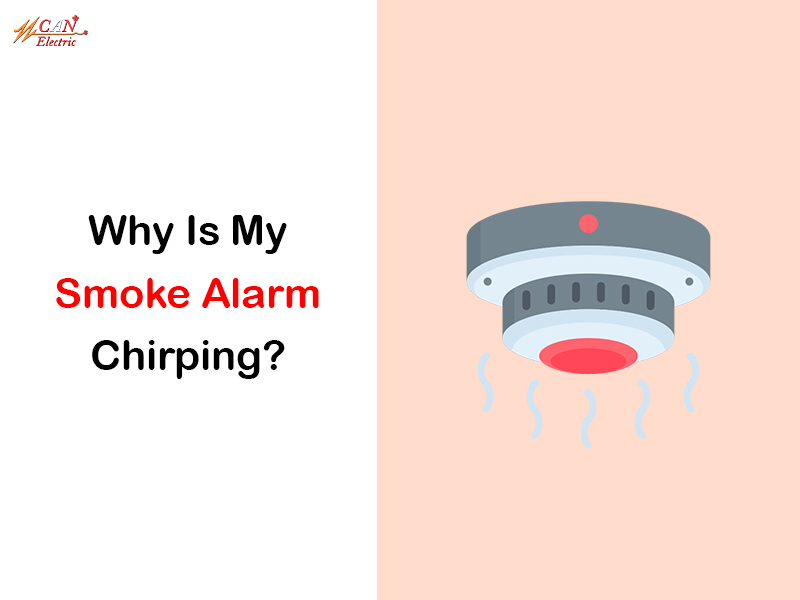
A maintenance chirp is a brief, high-frequency tone (typically at 3200 Hz) that lasts for a fraction of a second. It repeats at regular intervals—usually every 30 to 60 seconds. This signal indicates that while there is no immediate fire, the unit’s ability to detect one is compromised by low power, dust, or an internal error.
Full Constant Siren (The Emergency Signal)
If your alarm is emitting a loud, continuous pattern of three pulses followed by a short silence, this is the Temporal-3 (T3) protocol. This is not a malfunction or a battery warning. It is an evacuation command. The sensor has detected actual particulate matter consistent with smoke or fire.
The Difference Between Ionization and Photoelectric Alarms
There are two main types of sensors, and each reacts differently to the environment:
- Ionization Alarms: These use a minute amount of radioactive material to create an electric current in the air. When smoke enters, it disrupts this current and triggers the alarm. They are excellent at detecting fast-flaming fires but are hypersensitive to humidity and kitchen steam.
- Photoelectric Alarms: These use a light-scattering principle called the Tyndall Effect. A light beam inside the chamber is scattered by smoke particles onto a sensor. These are better for smoldering fires but are prone to false chirps caused by dust or insects.
The 5 Most Common Reasons for Smoke Alarm Chirping

1. Low Battery Power
This is the most frequent culprit. Smoke alarms require a steady voltage to monitor their internal logic gates. As a battery ages, its voltage drops. When it falls below a critical threshold (usually around 7.5V to 7.6V for a 9V battery), the device triggers a “Low Battery” state. Even if the battery feels “fresh” enough to power a remote, it may not meet the strict safety standards required for a life-saving device.
2. Battery Pull-Tab Issues
This is common in new installations or recently moved homes. Factory-new units ship with a plastic dielectric tab that separates the battery from the terminals to prevent it from draining during storage. If you install a hardwired unit but forget to pull the tab, the unit will run on your home’s AC power but immediately chirp because it detects “zero voltage” on its backup battery circuit.
3. Dust and Debris Interference
Smoke alarms are “open” systems; they need air to flow through them to work. This makes them a magnet for dust, cobwebs, and small insects (like spiders or fruit flies). In photoelectric sensors, a single speck of dust can settle on the LED lens, scattering light onto the sensor and mimicking the presence of smoke. This leads to a “Dirty Sensor” error, which usually requires a thorough cleaning rather than a battery change.
4. Temperature Fluctuations (The 3 AM Chirp)
There is a scientific reason why alarms always seem to chirp in the middle of the night. It relates to the Arrhenius Equation, which describes how chemical reactions slow down as temperatures drop.
When your home cools down at night, the chemical reactions inside your battery slow down. This increases the battery’s internal resistance and causes the terminal voltage to dip. A battery that has 7.7V of power in a 72-degree room at noon might drop to 7.4V when the house hits 62 degrees at 3:00 AM. This tiny dip crosses the threshold, triggering the alarm. When the sun comes up and the house warms, the chirp might stop, leading you to believe the problem fixed itself—until the following night.
5. Internal Errors and “End of Life” Signals
Every smoke alarm has an expiration date. Over time, the electronic components and the sensors themselves degrade. Most modern units have an internal clock that starts the moment the unit is powered. After 10 years, the unit will emit a specific “End of Life” signal (often 5 chirps). No amount of battery changing or cleaning will stop this; the unit is programmed to tell you it is no longer safe to use.
Troubleshooting Hardwired vs. Battery-Operated Alarms

Many homeowners assume that because their alarms are “hardwired” into the home’s electrical system, they don’t have batteries. This is a dangerous mistake. Hardwired alarms almost always have a 9V or lithium backup battery to ensure the system works during a power outage.
Hardwired System Anomalies
If a hardwired unit is chirping, the problem could be in your home’s wiring rather than the device:
- The “Floating Neutral”: If your home has a loose neutral wire in the electrical panel, the voltage going to your alarms can become unstable. This “dirty power” can cause the alarms to switch rapidly between AC and battery power, confusing the processor and causing a chirp.
- Circuit Interference: If your smoke alarms share a circuit with high-draw appliances or cheap LED dimmers, electrical “noise” can interfere with the alarm’s sensors.
- Interconnected Logic: In most modern homes, alarms are interconnected. This means if one unit has a low battery, it might send a signal through the “interconnect” wire, causing other units in the house to chirp as well.
Safety Sidebar: Is it Smoke or Carbon Monoxide?
Many modern alarms are “combination” units that detect both smoke and Carbon Monoxide (CO).
- Smoke Signal: 3 beeps (Temporal-3).
- CO Signal: 4 quick beeps followed by 5 seconds of silence (Temporal-4). Crucial Advice: If you hear the 4-beep pattern, do not assume it is a malfunction. Carbon monoxide is an odorless, colorless gas. Exit the house immediately and call the fire department from outside.
Step-by-Step Guide: How to Stop the Chirping Right Now

Step 1: Identify the “Troubled” Unit
In an interconnected system, finding the chirping unit is the hardest part. Look for the LED light on the face of the alarm. The unit that is experiencing the fault will usually have a flashing red or yellow light that flashes in sync with the chirp. The “healthy” units will usually have a solid green or a slow-pulsing green light.
Step 2: Replace the Battery with Quality Cells
Not all batteries are equal.
- Avoid Rechargeable (NiMH) Batteries: These have a lower starting voltage and a high “self-discharge” rate. They will cause your alarm to chirp much sooner than expected.
- Use Lithium 9V Batteries: While more expensive, lithium batteries have a “flat” discharge curve. They provide a steady voltage until they are nearly empty, which prevents the temperature-related chirps at night.
Step 3: Clean the Sensor (The Decontamination)
If the battery is new and the chirping continues, you likely have a “Dirty Sensor” error.
- Vacuum: Use the soft brush attachment on your vacuum to clean the vents around the perimeter of the unit.
- Compressed Air: Use short, gentle bursts of air to blow out any dust or cobwebs from the internal chamber. Note: Avoid sticking anything sharp into the vents.
Step 4: The “Deep Reset” (Capacitor Discharge)
This is the most important step for persistent chirping. Smoke alarms contain capacitors that hold a small amount of electricity even after the battery is removed. This residual charge can “save” the error state in the device’s memory.
- Disconnect power: Remove the battery and unplug the unit from the ceiling wiring harness.
- Press and hold the Test button: Hold the button down for at least 20 seconds. You may hear a faint, dying chirp—this is the remaining electricity leaving the device.
- Reassemble: Put in the new battery and plug it back in. This clears the “logic” of the device and starts it fresh.
The “Silent” Life Cycle: When to Replace the Entire Unit

You cannot rely on a smoke alarm forever. Over 10 years, the sensing components (like the Americium-241 in ionization units) lose their effectiveness.
How to check the age: Take the alarm down from the ceiling. On the back, you will find a “Date of Manufacture.” If that date is more than 10 years ago, your home is not fully protected. Even if the “test” button makes a sound, the sensor itself may be too degraded to detect smoke in time to save your life.
If you have a “10-Year Sealed” unit that has started chirping before its time, it has likely suffered a hardware failure. These units have a “deactivation” switch on the back that you must engage with a screwdriver to permanently kill the battery before disposal.
Read More: Do I Need an Electrical Panel Upgrade in Edmonton?
Advanced Troubleshooting: Why It Still Chirps After a Battery Change
If you have done the reset, cleaned the unit, and changed the battery, but the chirp persists, consider these rare but possible issues:
- Loose Wiring: A loose wire nut in the junction box behind the alarm can cause intermittent power loss.
- Interference from LED Dimmers: Modern smart switches and LED drivers can leak Radio Frequency Interference (RFI) into the lines, which can trigger the “fault” logic in older smoke alarms.
- Humidity/Steam: If the alarm is within 10 feet of a bathroom, the steam from a hot shower can condense inside the sensor, causing a “nuisance” alarm or a malfunction chirp.
When to Call a Professional Electrician

While most smoke alarm issues are DIY fixes, there are times when the problem is in your home’s electrical infrastructure. You should call a professional if:
- Multiple alarms are chirping simultaneously even after all batteries have been replaced.
- The chirping starts specifically when you turn on a certain appliance or light switch.
- Your home has frequent power surges or “brownouts.”
- You are uncomfortable working with the 120V wiring harness in your ceiling.
A professional electrician can test the “interconnect” line for ghost voltages and ensure that your home’s “neutral” wire is properly seated, preventing fire hazards that a simple battery change can’t fix.
Read More: 10 Ways to Lower Your Electric Bill
Conclusion & Fire Safety Checklist
A quiet home is a safe home only if the alarms are actually working. That annoying chirp is a feature, not a bug—it is the sound of a device doing its job to ensure it’s ready when an emergency strikes.
Your Monthly Safety Checklist:
- Test: Press the test button once a month.
- Clean: Vacuum the vents twice a year (set a reminder for when you change the clocks).
- Battery: Replace alkaline batteries once a year, or upgrade to 10-year lithium units.
- Examine: Check the “replace by” date on every unit in your house today.
Fire safety isn’t just about having an alarm; it’s about maintaining the system that watches over you while you sleep.